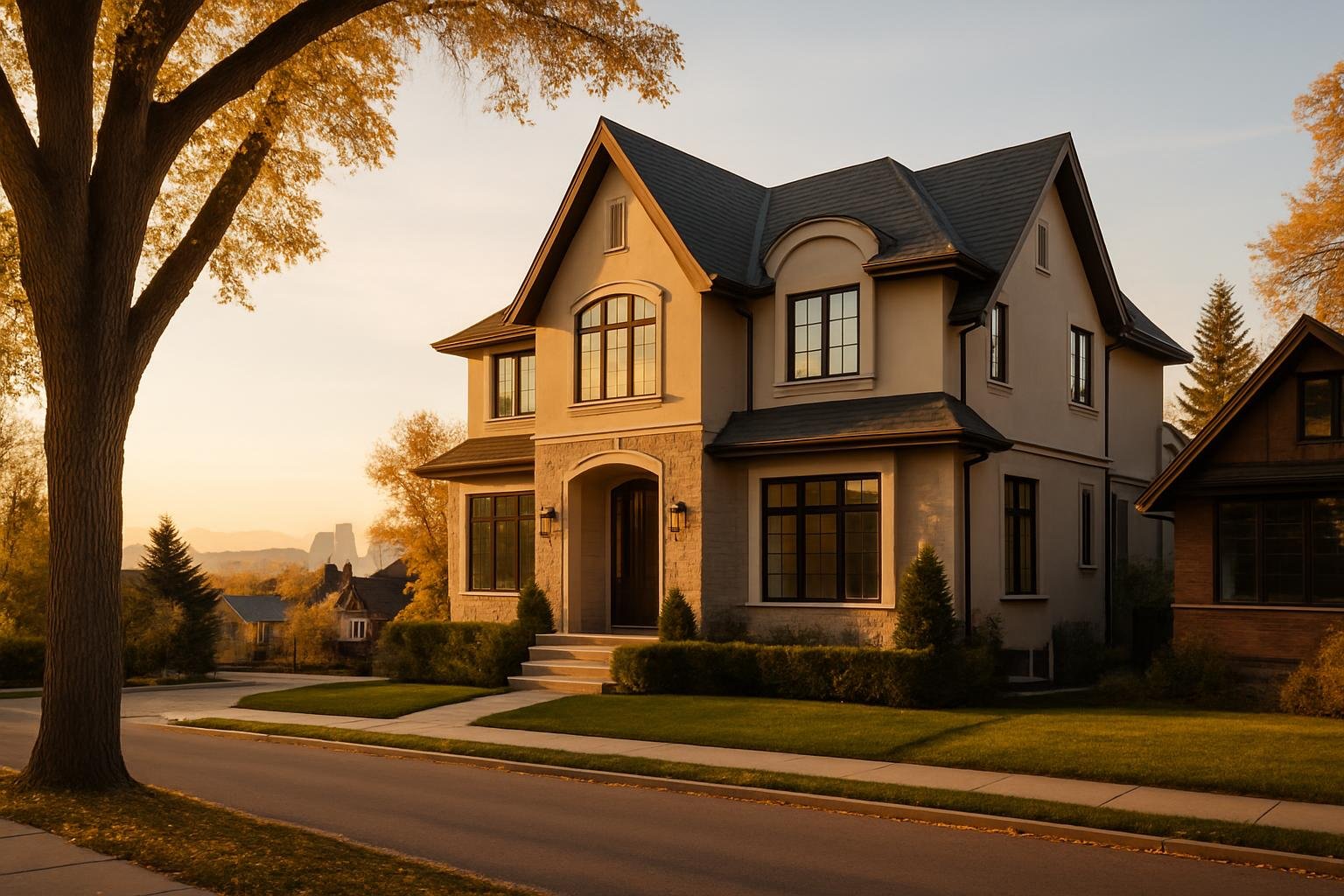
Living in Eagle Ridge and Bayview — Calgary's Glenmore Reservoir Estate Enclaves
Eagle Ridge and Bayview are small Glenmore Reservoir estate enclaves where the lot drives value. Here's how the market, rebuild math, and offers work.
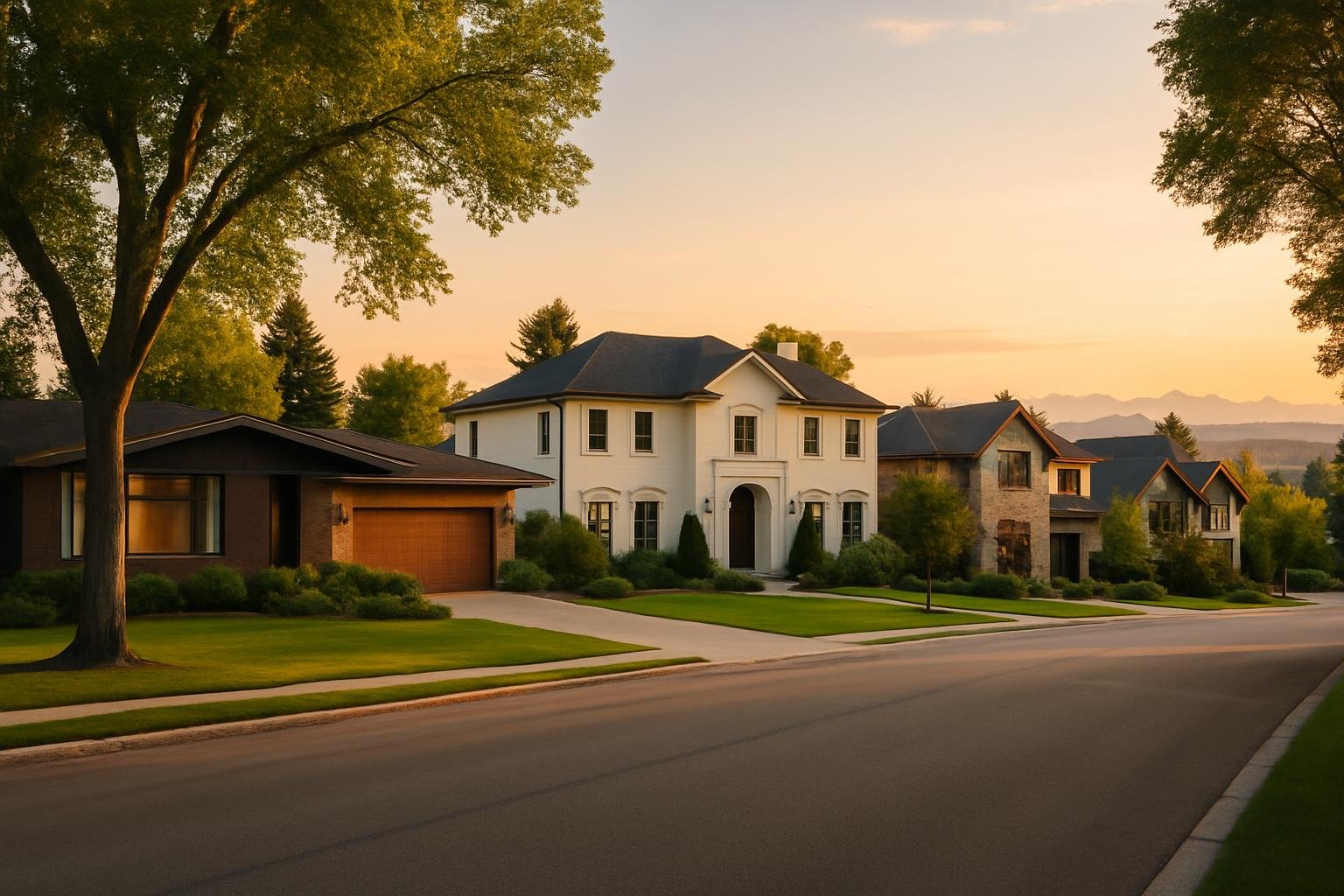
What is it like to buy a luxury home in Eagle Ridge and Bayview, Calgary?
Eagle Ridge and Bayview are two small, low-density estate enclaves in Calgary's inner southwest, set along the Glenmore Reservoir. Both are defined by larger-than-average lots, mature trees, original mid-century homes alongside major rebuilds, and limited turnover. Buyers here are usually paying for the land, the reservoir setting, and the option to renovate or rebuild — so the right purchase depends on lot quality and what you plan to do with it, not on the age of the house.
By Spencer Rivers — Calgary Luxury Real Estate Specialist | October 14, 2026
Most luxury buyers searching Calgary's inner southwest start with Elbow Park, Mount Royal, or Springbank Hill. Eagle Ridge and Bayview rarely make the first list — and that's exactly why they're worth a closer look. They're small, they're quiet in the sense that very few homes trade in a given year, and the lots are a different scale from much of the surrounding city.
This guide is the hub for our Eagle Ridge and Bayview cluster. It covers how the two enclaves compare as property markets, what the lots and homes actually look like, what the rebuild economics tend to be, and how to buy well when inventory is thin. It's written for buyers who are already serious — comparing districts, weighing a renovation against a new build, and trying to understand what a fair price looks like.
Why these two enclaves get grouped together
Eagle Ridge and Bayview sit close to each other along the Glenmore Reservoir and share the same underlying appeal: land, privacy, and proximity to water and open space within city limits. From a buyer's point of view, they behave like two chapters of the same story.
What they have in common:
- Small footprints. Both are compact communities with a limited number of properties. That means a handful of sales a year, sometimes fewer, and a thin comparable set.
- Larger lots. Many properties sit on lots that are generous by Calgary standards, which is what drives both the pricing and the rebuild potential.
- Mature landscaping. Established trees and long-settled streetscapes give both enclaves a finished feel that new communities can't replicate for decades.
- Reservoir and pathway access. The Glenmore Reservoir and surrounding green space shape how people use these neighbourhoods.
- A mix of original homes and substantial rebuilds. Walk or drive a street and you'll often see a mid-century original next to a recent custom home.
Where they differ is mostly in the details — lot orientation, which properties have reservoir views or frontage, and how much redevelopment has already happened on a given street. Those details are what the two spoke posts in this cluster go deep on: Eagle Ridge — inside the city's smallest and most private estate community and Bayview — reservoir lots, original bungalows, and the rebuild wave.
How the market works in a tiny enclave
Thin inventory changes how you buy. In a large community, you can compare six or eight recent sales within a few hundred metres and form a confident view of value. In a small enclave, you might have two relevant sales in the past year — and they may not be comparable at all, because one was an original home on a standard lot and the other was a reservoir-view lot with a teardown.
That has three practical consequences.
1. Pricing is driven by the lot first, the house second. In estate enclaves, the land typically carries most of the value, and the existing house either adds modestly or subtracts through demolition cost. Two properties on the same street can be priced very differently because of orientation, view, frontage, or slope.
2. Comparable sales need judgment, not just a search. A pure CREB comparables search will often under- or over-state value in a small market. You need someone who knows which sales were arm's-length, which were redevelopment plays, and which sold off-market. If you want context on how price points cluster in Calgary's upper tier, see the $3M to $4M sweet spot inside Calgary's hottest micro-market.
3. Off-market activity matters more. When there are only a handful of owners and many have held for decades, a meaningful share of trades never hit the MLS® system. I cover how this works in how to find off-market luxury listings in Calgary.
I'd treat any price range you read online — including the ones in this guide — as a starting frame, not a quote. The right number for a specific property comes from CREB data, a close look at the lot, and a conversation about what you intend to do with the home.
Lots, homes, and what you're really buying
The lot is the asset
In both enclaves, the questions that matter most are about the land:
- Size and shape. A wide, regular lot gives far more design freedom than a narrow or irregular one, even at the same square footage.
- Orientation and view. Reservoir views or frontage, sun exposure, and privacy from neighbours can swing value significantly.
- Slope and grade. Sloped lots can support walk-out lower levels and dramatic sightlines, but they also raise excavation and foundation costs if you rebuild.
- Setbacks and redevelopment rules. What you're permitted to build depends on the City of Calgary's land use rules for the specific parcel, so confirm zoning and any applicable development constraints before you make an offer.
The homes: originals, renovations, and rebuilds
You'll generally see three types of property:
1. Original mid-century homes. Often bungalows or split-levels on large lots. Some are well maintained and liveable as-is; others are effectively land sales. 2. Substantially renovated homes. Original structures updated and extended, with mixed results depending on the quality of the work. 3. Recent custom rebuilds. Architect-designed or builder-designed homes that take full advantage of the lot, typically with higher-end finishes, walk-outs, and large outdoor spaces.
The age of a house in this market is less meaningful than what sits underneath and around it. A 1960s bungalow on a premium lot may be worth more as land than a 2015 renovation on a lesser lot. For a deeper look at that decision in another heritage district, Britannia vs Elbow Park covers many of the same trade-offs.
Renovate or rebuild: the math that decides most purchases
Almost every serious buyer in these enclaves ends up asking the same question. Here's how I walk clients through it.
Start with the structure. A professional inspection tells you whether the existing home is worth keeping. In older homes, that means looking carefully at the foundation, electrical, plumbing, roof, and envelope. I've outlined what typically turns up in what a Calgary luxury home inspection actually finds and stucco, attic rain, and other Calgary-specific inspection issues.
Then compare three numbers.
- The all-in cost of renovating to the standard you want, including a contingency for surprises.
- The all-in cost of demolishing and rebuilding, including design, permits, site work, and construction.
- The finished value you'd realistically expect for the lot and location, based on recent comparable rebuilds.
Account for time. A major renovation or custom build typically takes many months to years from design through occupancy, and you'll likely carry two sets of housing costs for part of that period. That's a real cost even if it doesn't show up on a builder's quote.
Account for risk. Budgets on custom work move. Build in a meaningful contingency and use fixed-price contracts where you can. We'll go deeper on this in the Custom Build vs Resale cluster, and the same logic applies across every heritage and estate district.
I'm not a builder or an accountant, so I'd always have your builder, lawyer, and tax adviser confirm the specifics. What I can do is help you frame the comparison before you make an offer, so you know what the lot is worth to you rather than what the listing says.
How Eagle Ridge and Bayview compare to other Calgary estate districts
Buyers usually come to these enclaves while comparing several districts. A fair comparison looks at property characteristics, not lifestyle labels:
- Versus Springbank Hill: Springbank Hill offers more new-build inventory and larger-scale estate homes on newer lots; Eagle Ridge and Bayview offer established landscaping and original land with redevelopment optionality. See living in Springbank Hill.
- Versus Upper Mount Royal and Elbow Park: Those districts have deeper inventory and a stronger heritage-home stock, with more comparable sales. Eagle Ridge and Bayview are smaller markets with fewer transactions. See the Upper Mount Royal and Elbow Park buyer's guide.
- Versus Britannia and Bel-Aire: These are closer in character — small, estate-oriented, and defined by lots — so the comparison often comes down to specific properties rather than district-wide averages. See living in Britannia and living in Bel-Aire and Mayfair.
For a wider view of how these fit into the city's luxury market, start with the best luxury neighbourhoods in Calgary.
How to make a strong offer when there's very little to compare
Thin markets reward preparation. Here's what I recommend.
1. Get your financing confirmed before you tour. Estate-lot properties can move quickly or quietly, and you want to act on the right one. If you're coordinating a sale and purchase at the same time, plan the sequencing early. 2. Decide your plan before you decide your price. Are you keeping the house, renovating, or rebuilding? Your answer changes what the property is worth to you. 3. Commission a thorough inspection and check the lot. Beyond the home itself, consider a review of the survey or Real Property Report, the title, and any registered restrictions. 4. Use conditions strategically. The right conditions protect you without making your offer uncompetitive. I explain the trade-offs in conditional vs firm offers in Calgary's luxury market. 5. Anchor your offer in value, not asking price. In a thin market, list price is a starting point. How to make a winning offer on a Calgary luxury home walks through the full approach.
Don't forget the cost side of the purchase. Closing costs in Alberta are modest because there's no land transfer tax, but they're not zero, and a new build adds GST. Our breakdown of what it costs to buy a luxury home in Calgary covers the full picture.
Ten questions to answer before you tour
Before you book showings in either enclave, get clear on these. They'll save you months.
1. What's my realistic budget for the lot, and what's my separate budget for the home or the build? 2. Am I buying to live in the existing house, renovate it, or rebuild? 3. How long am I willing to wait for the right property, given how few come up? 4. Do I need reservoir views or frontage, or is proximity enough? 5. How much privacy and outdoor space do I need, and what does that mean for lot size? 6. What does my lender need to see, and have I confirmed my pre-approval for a purchase at this level? 7. If I'm selling first, how will I time the sale and the purchase? 8. Who's on my team — lawyer, inspector, builder, and mortgage broker — and have they worked on estate-lot files before? 9. What would make me walk away from a property, such as structural issues, title restrictions, or lot constraints? 10. How will I find properties that never reach the MLS®?
If you can answer most of these, you're ready to shop. If you can't, that's the right place to start the conversation.
If you're selling in Eagle Ridge or Bayview
The same thin-market dynamics apply in reverse. Pricing a property where comparables are sparse is as much about positioning the lot as listing the house. A careful pricing strategy matters, because overpricing in a small market can leave a property sitting for months. I cover the approach in how to price a luxury listing in Calgary the right way and what to do if a listing goes stale in when and how to reduce the price.
Sellers here also have a real choice about how to bring a property to market: a full MLS® exposure, a quiet or off-market approach, or a hybrid. The right path depends on your goals and timeline, and it's worth deciding before the first showing.
Choosing an agent for a small-enclave purchase
In a market this small, the agent you choose matters more than usual. You want someone with direct experience in estate-lot transactions, a clear process for valuing land, and relationships that surface opportunities before they're public. I wrote how to choose a luxury real estate agent in Calgary to help you evaluate that objectively, including the questions to ask before hiring.
Frequently Asked Questions
Are Eagle Ridge and Bayview the same neighbourhood?
No. They're separate Calgary communities that sit near each other along the Glenmore Reservoir and share similar estate-lot characteristics. Buyers often consider them together because both offer larger lots, mature landscaping, and low turnover.
What do luxury homes cost in Eagle Ridge and Bayview?
Prices vary widely because the lot drives value. Many sales fall in the multi-million-dollar range, with the highest prices reserved for reservoir-oriented lots and recent custom homes. Because there are so few sales, ask for current CREB data on comparable properties rather than relying on a district average.
Should I buy and renovate or buy and rebuild in these enclaves?
It depends on the condition of the existing structure, the quality of the lot, and your budget and timeline. Compare the all-in cost of renovation against a full rebuild, then weigh both against the realistic finished value for that lot. An inspection and a builder's estimate should come before you make an offer.
Are there off-market homes in Eagle Ridge and Bayview?
Sometimes. In small enclaves with long-term owners, some transactions happen privately without a public listing. Working with a REALTOR® who has relationships in the area improves your chances of hearing about them early.
Is the Glenmore Reservoir area subject to any development restrictions?
Parcel-specific land use rules, setbacks, and other constraints can apply, so confirm the details with the City of Calgary and your lawyer before relying on any redevelopment plan. This is general information, not legal advice.
Where to go from here
Eagle Ridge and Bayview reward buyers who do the homework: understand the lot, run the renovate-versus-rebuild math, and make decisions based on value rather than the age of the house. If you're considering a purchase or sale in either enclave and want a private conversation about the properties and the numbers, I'd be glad to help. Reach me at luxuryhomescalgary.ca/lets-connect.
About Spencer Rivers — Calgary Luxury Real Estate Specialist Spencer Rivers is a luxury real estate agent serving Calgary and the surrounding Calgary Metropolitan Region. With over $200M in career sales and designations including CLHMS, CIPS, and Million Dollar Guild membership, he specializes in helping buyers and sellers navigate Calgary's luxury market — from estate homes in Springbank Hill and Upper Mount Royal to luxury condos in East Village and Eau Claire. Connect with Spencer at luxuryhomescalgary.ca.
REALTOR® at Rivers Real Estate · Synterra Realty. Spencer represents buyers and sellers across Calgary's luxury communities — Springbank Hill, Aspen Woods, Upper Mount Royal, Elbow Park, Britannia, and Bel-Aire.